01
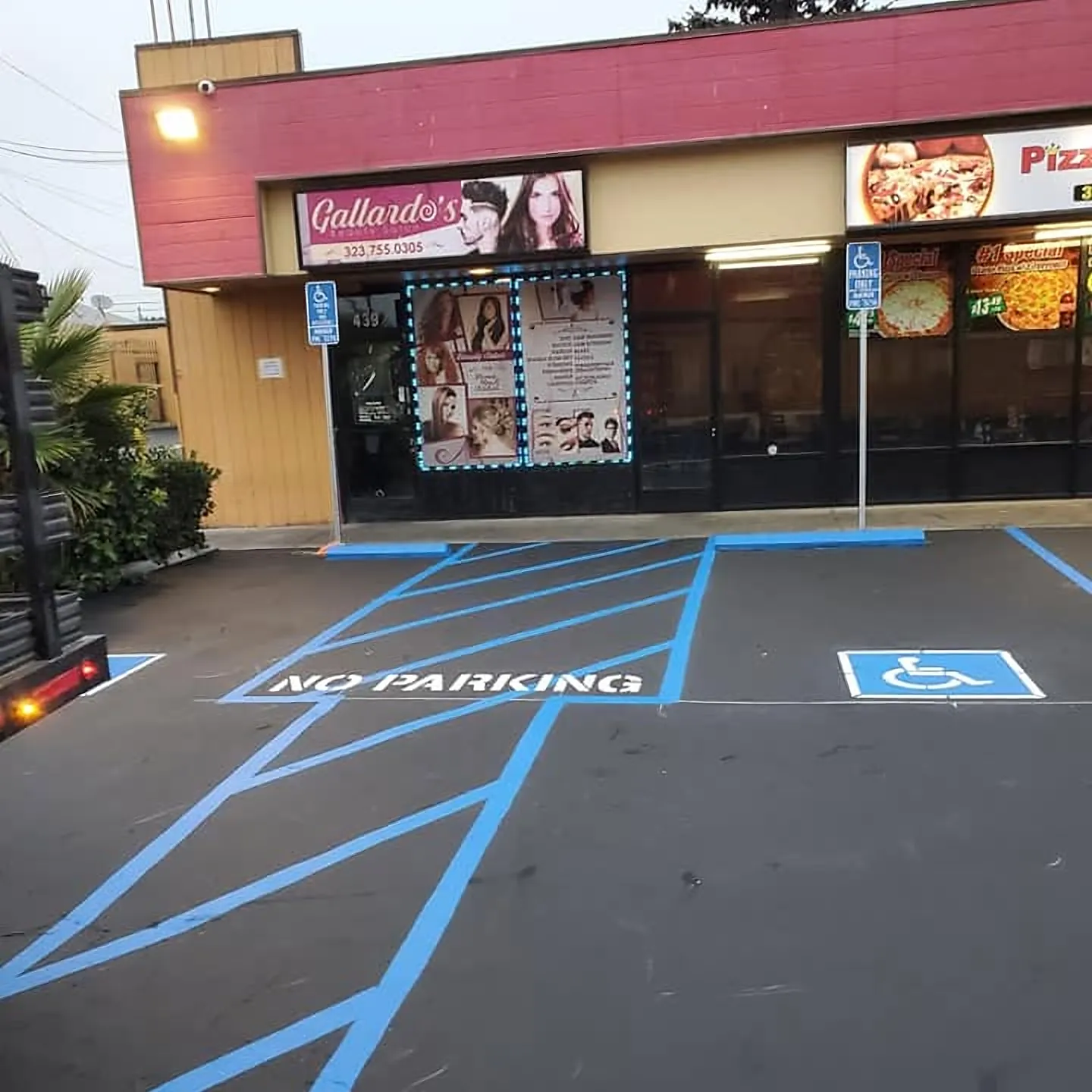
ADA compliance
Accessible stalls, access aisles, signage, ramps and truncated domes, built and marked to code.
ADA complianceRestripes and new layouts laid out with laser-guided airless stripers, so you get straight lines, matched ends and no paint spills.
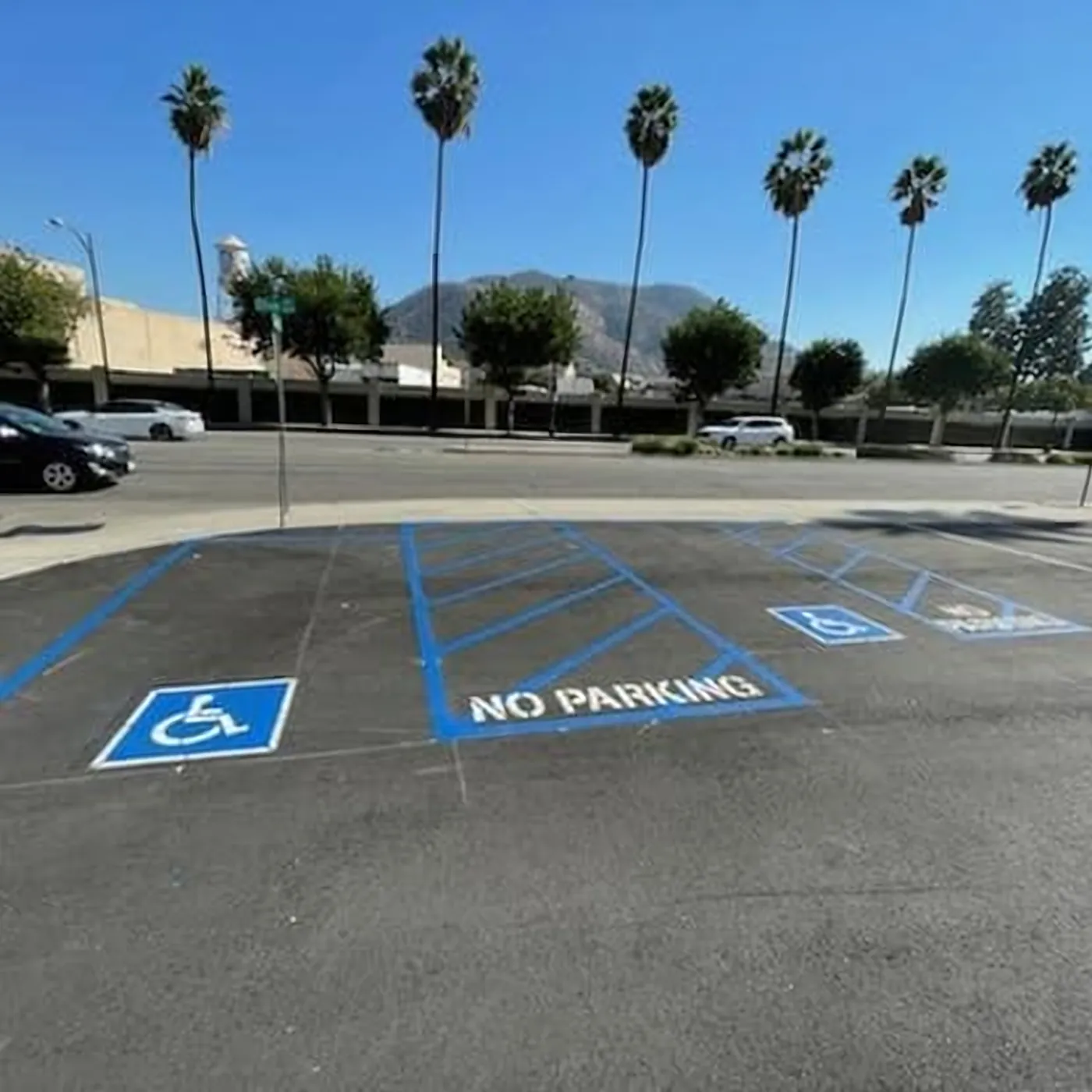
Parking lot striping in Los Angeles is either a restripe, which repaints your existing layout, or a new layout, which measures and marks a different plan. Highway Masters Paving uses laser-guided airless line stripers and the same paint used by the Washington State DOT. Under federal guidance, any restripe must also provide accessible parking that meets the 2010 ADA Standards.
A restripe follows the lines that are already on the pavement. The crew cleans the surface, traces the old marks and repaints them, often right after a sealcoat has covered the old paint. It is the right call when the layout works and the lines have simply faded.
A new layout starts from fresh pavement or from a surface where the old lines have been covered. We measure the lot, plan stall rows and drive aisles, mark the plan on the pavement and then paint. It makes sense after a full repave, when you want more stalls, when traffic backs up at the entrance, when accessible parking has to move closer to the door, or when the old lines never made sense in the first place.
| Question | Restripe | New layout |
|---|---|---|
| Starting point | Existing lines, faded or covered by sealcoat | New pavement, or old lines covered or removed |
| Planning | Trace and match what is there | Full measure, stall and aisle plan, marking out |
| Stall count | Stays the same unless ADA corrections change it | Can go up or down |
| Accessible parking check | Required under federal guidance | Required |
| City review | Usually not needed if nothing changes | May be needed if the stall count or access changes; check with your city |
| Typical trigger | Faded paint, a fresh sealcoat | Repave, change of use, poor traffic flow, more stalls |
Every lot is built from modules: a row of stalls, a drive aisle, and usually a second row of stalls that shares the same aisle. A double-loaded aisle, with stalls on both sides, is the most efficient use of pavement because one aisle serves two rows. A single-loaded aisle along a fence or a building uses the same aisle width to serve half as many cars, so we avoid it where the lot shape allows.
The stall angle sets the aisle width. Ninety-degree stalls fit the most cars per foot of row and work with two-way traffic, but they need the widest aisle so drivers have room to swing in and back out. Angled stalls let drivers pull in with less turning, so the aisle can be narrower, but each stall takes more length along the row and the aisle has to run one way. On a narrow lot, angled stalls with a one-way loop can fit more cars than ninety-degree stalls that would not leave room for a legal two-way aisle.
Minimum stall and aisle sizes come from the local zoning code. In the City of Los Angeles they sit in the parking rules of the Municipal Code (LAMC 12.21), and Long Beach, Gardena, Torrance and the other cities around us each have their own. We lay out to the numbers your city uses, not a generic template.
Accessible stalls change the math. In California an accessible car stall is 108 inches wide with a 60-inch access aisle beside it, and two stalls can share one aisle (CBC 11B-502). A pair of accessible stalls with a shared aisle therefore uses 276 inches, or 23 feet, of row length. A van stall is 144 inches wide, or 108 inches if its aisle is 96 inches wide. These stalls must sit on the shortest accessible route to the entrance, so we plan them first and fit the regular stalls around them. The full rules are on our ADA parking lot compliance page.
Last, the layout has to work around what does not move: light pole bases, planters, drains, trash enclosures, fire lanes and the entrance throat where cars queue in from the street. Keeping stalls out of the entrance throat means a car backing out never blocks traffic coming in.
We stripe with airless line stripers that are laser guided. An airless machine pushes paint at high pressure through a small tip, which lays a clean-edged line at an even thickness. The laser projects a reference line ahead of the machine, so the operator steers to it instead of eyeballing a straight line across a long open row. That is how we avoid the three things owners complain about most: banana lines that curve, ends that do not match up, and paint spills on curbs and walkways.
For the paint itself we use the same paint that is used by the Washington State DOT. Highway agencies need traffic paint that holds up under heavy traffic and weather, and that is the standard we wanted on parking lots too.
Most lots need more than straight lines. Our crews apply stencils for:
Red curb and fire lane marking follow their own rules, covered on our fire lane striping page.
Traffic paint is pigment held in place by a binder. A handful of things wear it down, and most of them can be controlled at the time of painting:
This catches many owners off guard. The U.S. Department of Justice says that when a business or other covered entity restripes its parking lot, it must provide accessible parking spaces as required by the 2010 ADA Standards for Accessible Design (ada.gov: Restriping Parking Spaces). So you cannot simply repaint an old layout that has too few accessible stalls, stalls that are too narrow, or no van-accessible space.
A restripe should start with three checks: the number of accessible stalls against the count table, the width of each stall and access aisle, and the slope of the pavement where those stalls sit. California adds its own requirements in the California Building Code (CBC Chapter 11B), which are stricter than the federal rules in several places. Paint can fix the count and the widths. It cannot fix slope, which is why some ADA corrections need asphalt or concrete work before the paint goes down. Because we pave and pour concrete as well as stripe, that work stays on one schedule.
There is no fixed calendar. The honest test is to look: if you cannot clearly read the stall lines, arrows and accessible markings from a car at the entrance, or if the aisle hatching and fire lane wording have faded, it is time.
As a general pattern, busy retail lots, gas stations and drive-throughs wear fastest at the turning points and often need a refresh every year or two. Office, church and apartment lots with lighter traffic usually go longer. Every sealcoat covers the existing lines, so a lot that is sealcoated needs a restripe right after, once the sealer has cured. Scheduling both together as part of an asphalt maintenance plan saves a second mobilization. We serve Mobil and Exxon stations across Southern California, where pump islands and entrances take constant tire wear.
Estimates are free and written, we will beat any written estimate, and we offer senior and military discounts. Highway Masters Paving holds California contractor license 1066838 and is insured and bonded. We are based in South Los Angeles and stripe lots across Los Angeles and nearby cities such as Gardena.
Most lots cannot close for a day. A lot can be striped in sections, coning off one area while the rest stays in use, with the order planned so drivers always have a way in and out. Fresh traffic paint needs a short dry time before tires cross it, so cones stay up until it is ready and nobody tracks wet paint across the lot. For apartment complexes and homeowner associations, sections can be set with residents in mind so they know when to move their cars. No job is too big or too small: we restripe a few stalls in front of a storefront the same way we stripe a full commercial lot.
Sealcoat first, then stripe. Sealer covers the old lines, so striping always comes after it. The sealer also has to cure before paint goes on; paint laid on soft sealer can crack, bleed or lift. Cure time depends on the product, temperature and humidity, so we set the striping date once the sealer is ready. Doing both in one sealcoating job keeps it to a single schedule.
Repainting the same layout usually does not need a permit, but rules vary by city and project. A new layout that changes the number of stalls, the required parking for the building or the accessible route may need city review, and the accessible parking still has to meet the 2010 ADA Standards and CBC Chapter 11B. Check with your city's building or planning department before changing a layout.
Yes. Under the count table in the 2010 ADA Standards, a lot with 1 to 25 total spaces needs at least one accessible space, and because one in every six accessible spaces must be van accessible, that single space has to be a van space. California uses the same count. See our ADA parking lot compliance page for the full table and dimensions.
Often, yes. A new layout can change stall angle, aisle direction and row placement to fit more cars, especially on lots that were laid out with single-loaded aisles or wasted corners. More total stalls can also raise the number of accessible stalls you need, and the layout must still meet your city's minimum stall and aisle sizes. The lot should be measured and the plan agreed before any paint goes down.
Fresh traffic paint needs a short dry time before tires cross it. How long depends on temperature, humidity, sun and how thick the line goes down: a warm dry afternoon is quicker than a cool, damp morning. Cones should stay up in each section until the paint is ready, and open lots can be striped in phases so the rest of the lot stays usable.
Yes. Along with stall lines we paint directional arrows, stop bars, crosswalks, wording such as compact or visitor, accessible stall symbols and aisle hatching, custom stencils, and curb paint. Red curbs and fire lane lettering are marked the way the fire department designates them; see our fire lane striping page.
Call (323) 915-8765 or use the estimate form below.
We look at the surface, the base and the drainage on site.
You get the price in writing. Already have a quote? We will beat it.
Our own crews and equipment, start to finish.
Accessible stalls, access aisles, signage, ramps and truncated domes, built and marked to code.
ADA compliance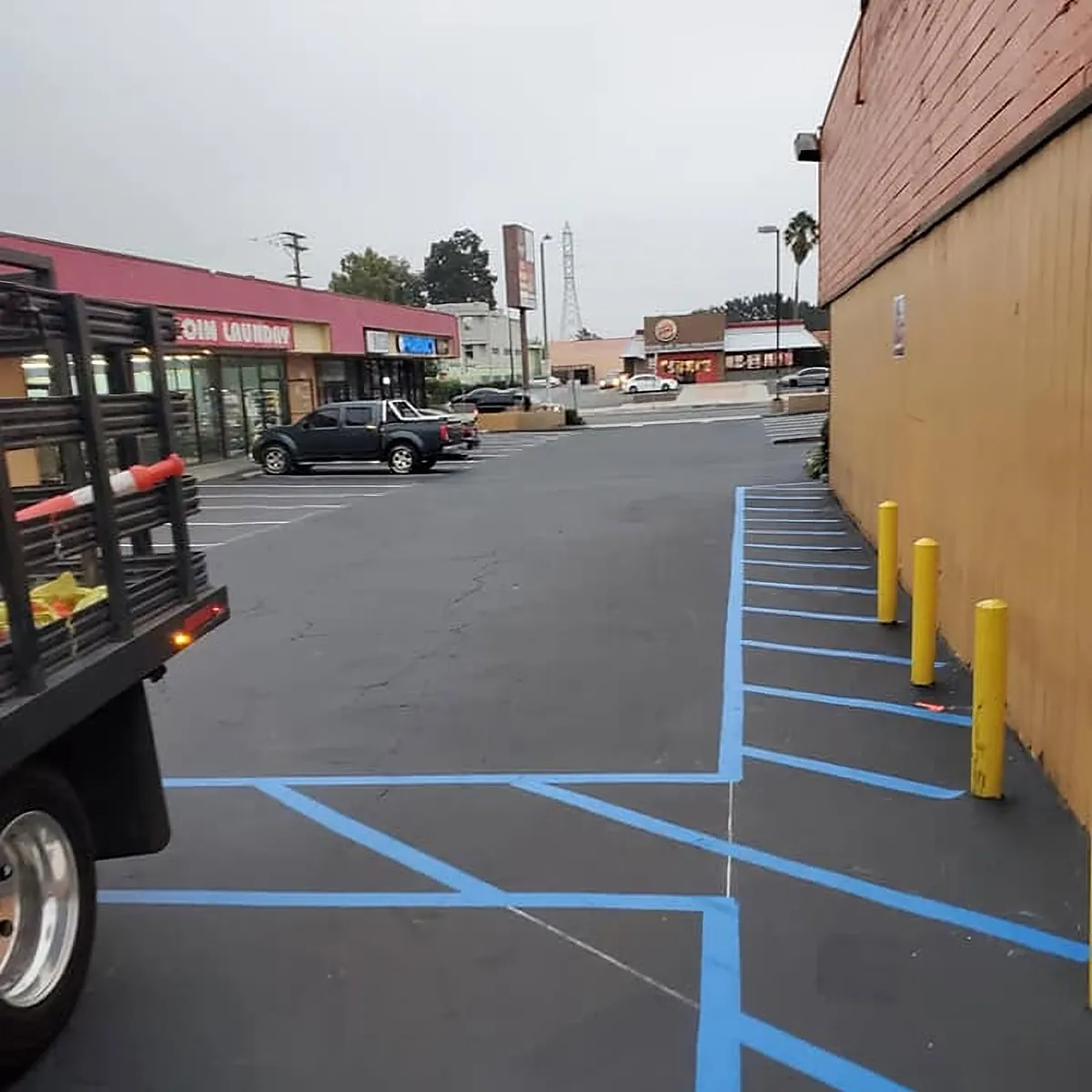
Red curbs, fire lane stenciling and signage so emergency access stays clear and your property passes inspection.
Fire lane compliance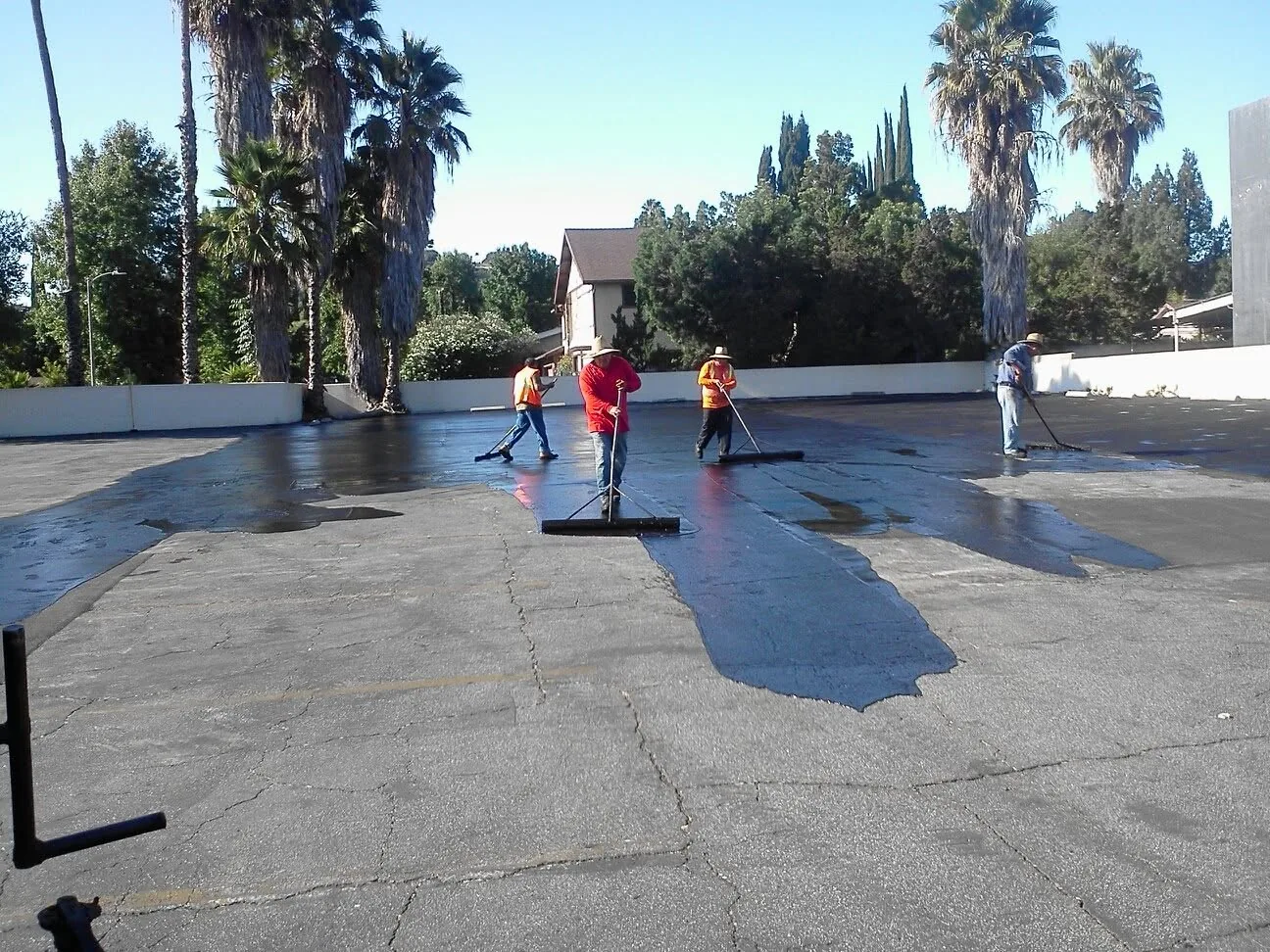
No detail is missed. We mask all concrete, tape-line every entrance and transition, and seal off all drains before any sealer goes down.
SealcoatingI had the pleasure of working with Herminio "Chris" Morales on a recent re-paving job that he did for one of the properties that I manage. My experience was excellent. Chris was professional, the work was completed on time, the job was done to my satisfaction, and the price was very competitive. I would highly recommend Highway Masters Paving to anyone who is in need of a top notch paving and asphalt company!
Mr. Morales and his crew repaved our company parking lot at Take A Byte Inc in Gardena. Him and his crew were very professional and we were 100% satisfied with quality and timeliness of his work.
Highway Masters did wonderful job. I was looking for a paving contractor who could help with our parking lot. The estimate was great and the crew did professional work.
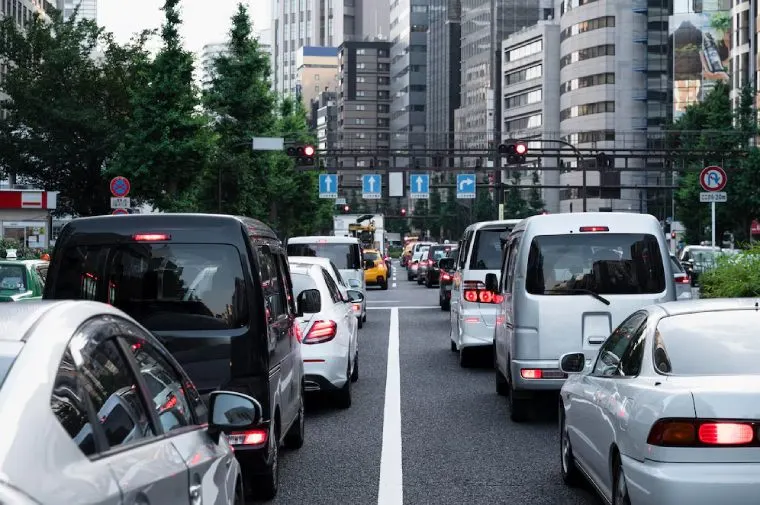
For high-traffic LA pavement: a solid base, the right asphalt thickness, concrete where trucks turn or park, good drainage and steady maintenance.
Read the article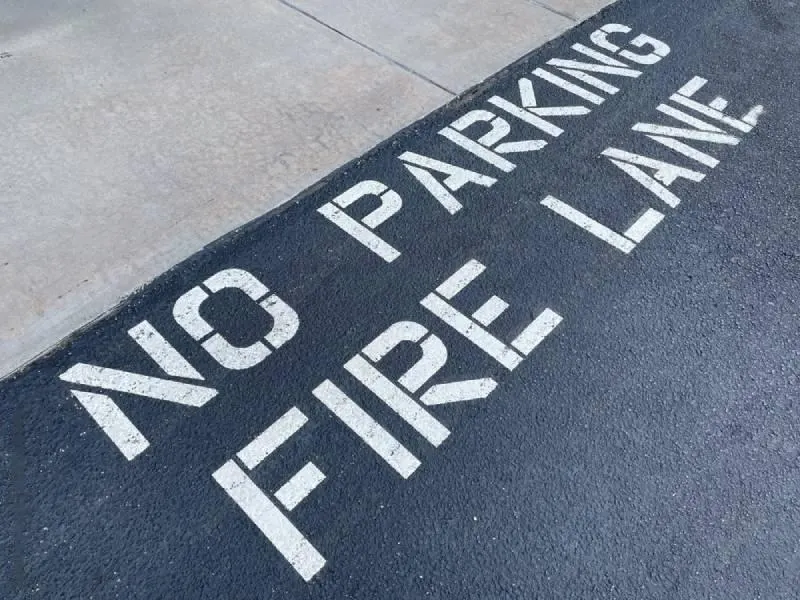
An unmarked or faded fire lane is hard to enforce under CVC 22500.1, invites blocked access in an emergency and leaves the property owner exposed.
Read the article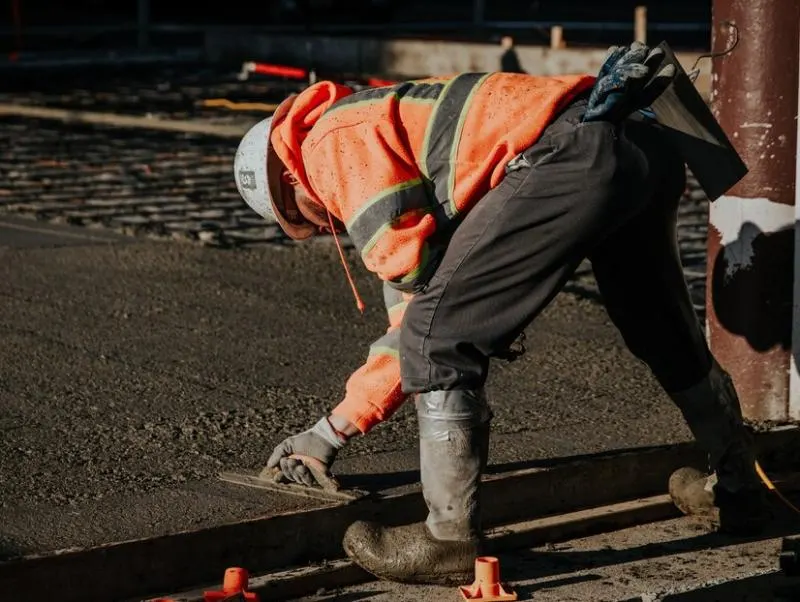
How to choose a concrete contractor in Los Angeles: check the CSLB license and insurance, past work, a detailed written estimate, reviews and permits.
Read the articleTell us what you need paved, sealed or striped. We'll come out, measure and give you a written quote. Already have one? Send it over, we will beat it.
 Work order
No. HM-00000
Fills in as you go →