Published June 6, 2024 · Updated November 23, 2026
If it rains before sealcoat has dried, the rain can wash some sealer away, leave streaks and light patches, or create a milky, uneven finish that protects less. If the sealer had several hours of warm, dry weather first, there is often little damage. Inspect once dry, touch up small areas, and recoat if large sections are affected.
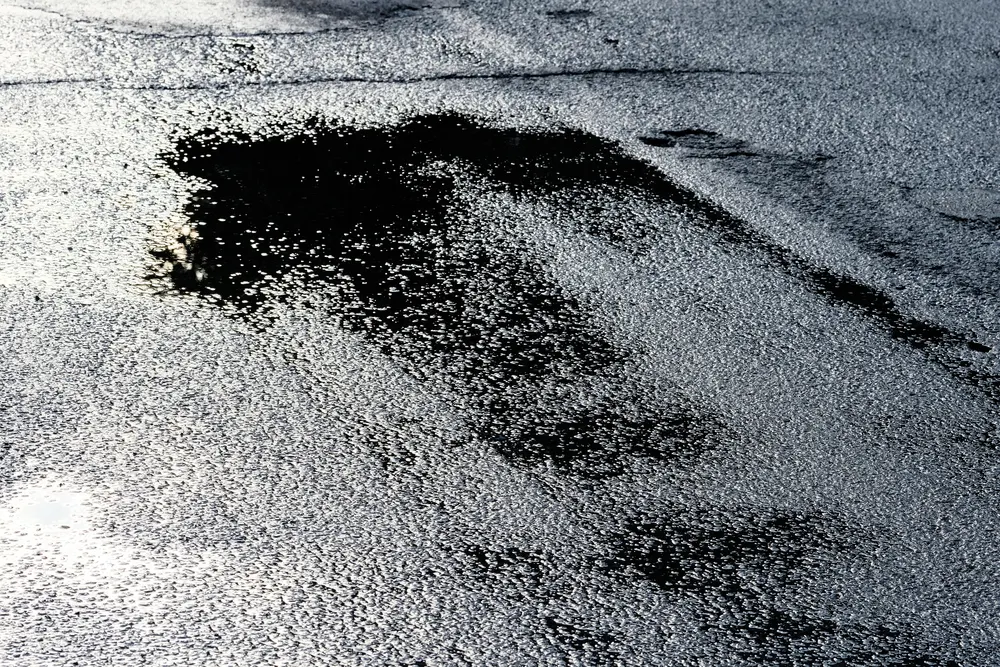
Sealcoating is an important part of taking care of an asphalt driveway. It adds a protective layer that helps the driveway last longer. But rain at the wrong time can ruin a fresh sealcoat. This article explains what happens if it rains after sealcoating, how weather affects drying and curing, and what to do if rain damages the job.
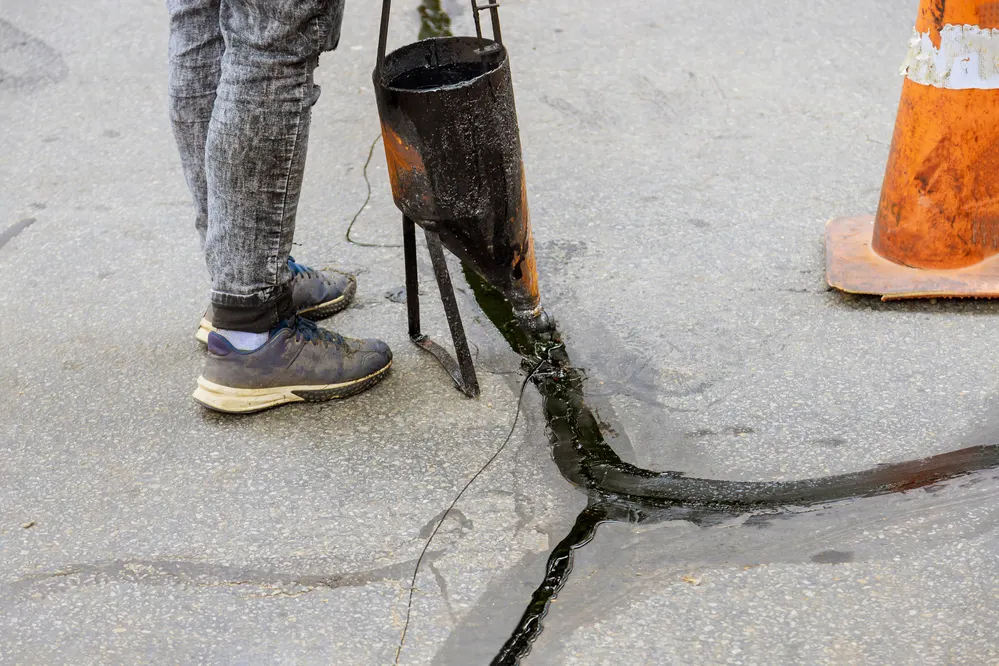
What Happens If It Rains After Sealcoating?
If it rains before the sealcoat has dried, the rain can wash some of the sealer away, leave streaks and light patches, or create a milky, uneven finish that protects less. If the sealcoat had several hours of good drying weather before the rain, there is often little or no damage. The outcome depends on how long the sealer had to dry, the product, and the temperature and humidity.
Why Is Sealcoating Important?
Sealcoating your asphalt driveway has several benefits:
- Protection: It guards the asphalt from UV rays, water, oil, and chemicals.
- Appearance: It gives the driveway a fresh, black look.
- Durability: Along with crack sealing, it helps slow the wear that leads to cracks and potholes.
For sealcoat to work well, it has to be applied in the right weather and at the right time of year.
What Weather Does Sealcoating Need?
Sealcoating should be done in dry, warm weather with no rain in the forecast. Rain causes problems at every stage:
- Rain before sealing: If the asphalt is wet, the sealcoat will not bond well.
- Rain during sealing: Water can wash the sealer off before it sets.
- Rain after sealing: Rain on sealer that has not dried can cause streaks, an uneven finish, and less protection.
In Los Angeles, the dry months from late spring through early fall are the most reliable for sealcoating. Winter storms make December through February harder to schedule.
What If It Rains a Few Hours After Sealing the Driveway?
Rain within the first few hours is the biggest risk, because most sealers are still wet or only skin-dry. Heavy rain at that stage can wash sealer onto the sidewalk or street and leave bare or streaked areas. Light rain may only dull the finish.
What If It Rains 12 Hours After Sealing the Driveway?
By about 12 hours, many water-based sealers have dried on the surface in warm weather, so a light rain may cause little harm. In cool, humid, or shaded conditions, the sealer may still be soft and can streak or wash out.
What If It Rains 24 Hours After Sealing the Driveway?
Rain 24 hours after sealing is usually not a problem, because most sealers have dried by then in normal weather. If it was cool, humid, or foggy, or the coat was applied thick, the sealer may still be vulnerable. Always check the manufacturer's drying time recommendations.
What Is the Difference Between Drying and Curing?
Drying is when the water evaporates and the surface is no longer wet or tacky. Curing is when the sealer fully hardens and bonds to the asphalt, which takes longer. Temperature, humidity, sun, and how thick the coat is all affect both. A sealcoat can survive rain once it is dry, but it keeps gaining strength for days afterward.
How Long Does Sealcoat Need to Dry Before Rain?
Most sealcoat products need at least 4 to 8 hours of dry weather to survive light rain, and 24 to 48 hours before they can take vehicle traffic. The exact time depends on the product and conditions. Check the forecast and plan the job for a dry stretch of at least a day or two. See how long after sealcoating you can drive on it for more.
Can You Sealcoat or Pave in the Rain?
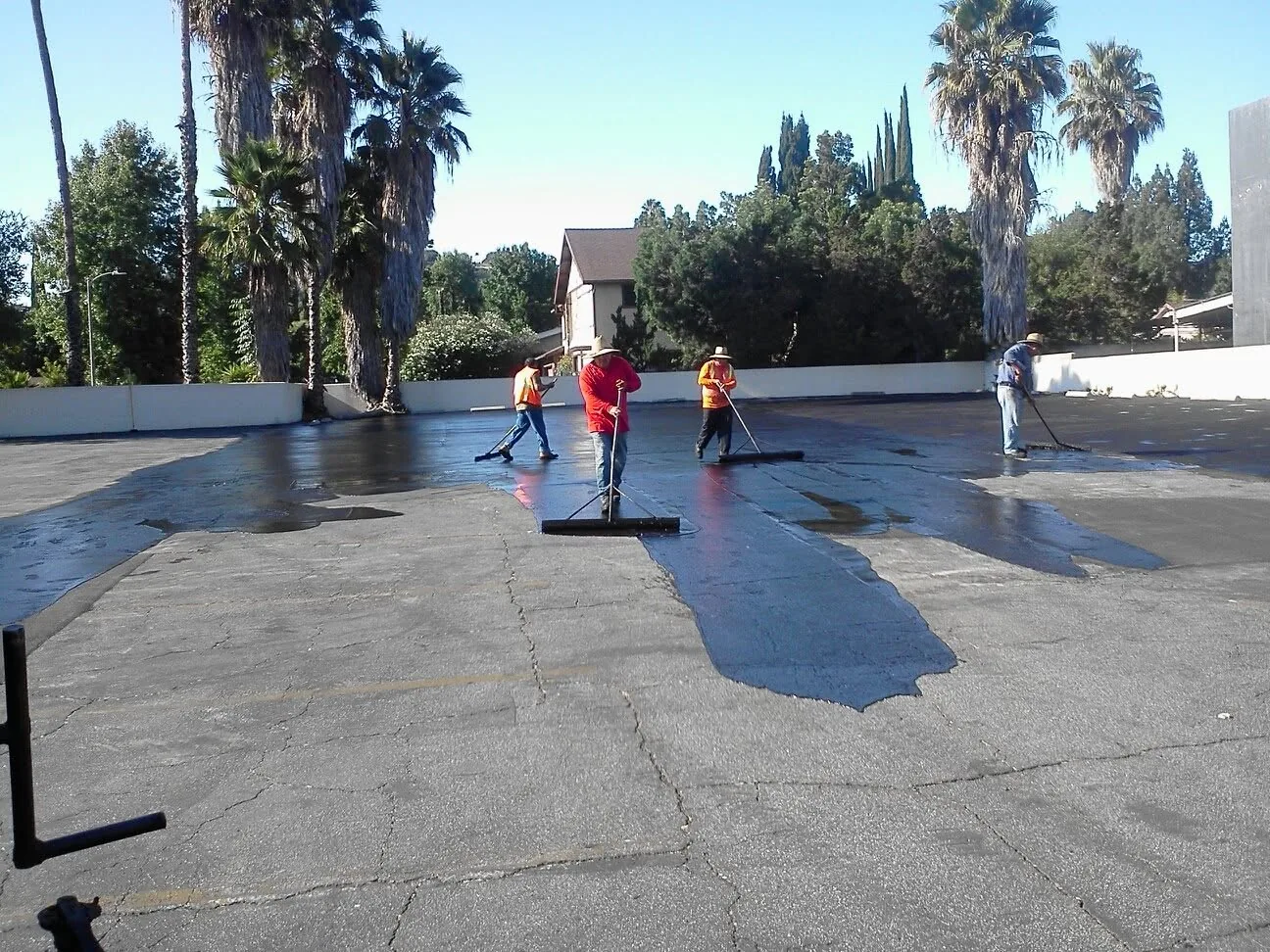
You should not sealcoat in the rain. Water keeps the sealer from bonding to the asphalt and can wash it away, so wait for clear, dry weather. Paving with hot mix asphalt is different: experienced crews can sometimes pave through light rain as long as there is no standing water on the base, as our crew did on a paving job in Northridge. Heavy rain stops paving too.
What Should You Do If It Rains After Sealcoating?
Even with careful planning, rain can arrive unexpectedly. Here is what to do.
Immediate Actions
- Stay off the driveway: Do not drive or walk on it until the rain has stopped and the surface is fully dry.
- Clean up runoff: Rinse any washed-off sealer from sidewalks and garage floors as soon as possible, before it dries, and keep it out of storm drains where you can.
- Inspect the surface: Once dry, check for areas where the sealer washed away, streaked, or looks lighter.
Assessing the Damage
- Minor damage: If only small areas are affected, touch them up with more sealer once the surface is clean and dry.
- Major damage: If large sections are streaked or bare, the driveway may need another full coat.
Preventive Steps
- Do not cover fresh sealer with a tarp: A tarp sticks to wet sealer and ruins the finish. Reschedule instead if rain is likely.
- Choose the right product: Fast-drying sealers shorten the window when rain can cause damage.
- Turn off sprinklers: Sprinklers can do the same damage as rain on a fresh coat.
How Do You Plan a Sealcoat Around the Weather?
Pick a warm, dry stretch with no rain or heavy fog in the forecast for at least a day or two, and allow enough time for the sealer to dry and cure. That gives you a durable, even sealcoat. If you need help with sealcoating or have questions about asphalt maintenance, call Highway Masters Paving at (323) 915-8765.